Work / Supreme Electric
Supreme Electric. An electrician's site that already ranked, rebuilt without losing any of it.
- Business
- Electrical contractor, Anchorage and the Mat-Su. Family owned since 2010.
- What we did
- Design, Build, Writing, Live Google reviews, Forms to the office, Redirects
- Pages
- 22 real pages; all 103 old addresses still work
- Status
- Redesign in progress. The preview is live while the owners review it.
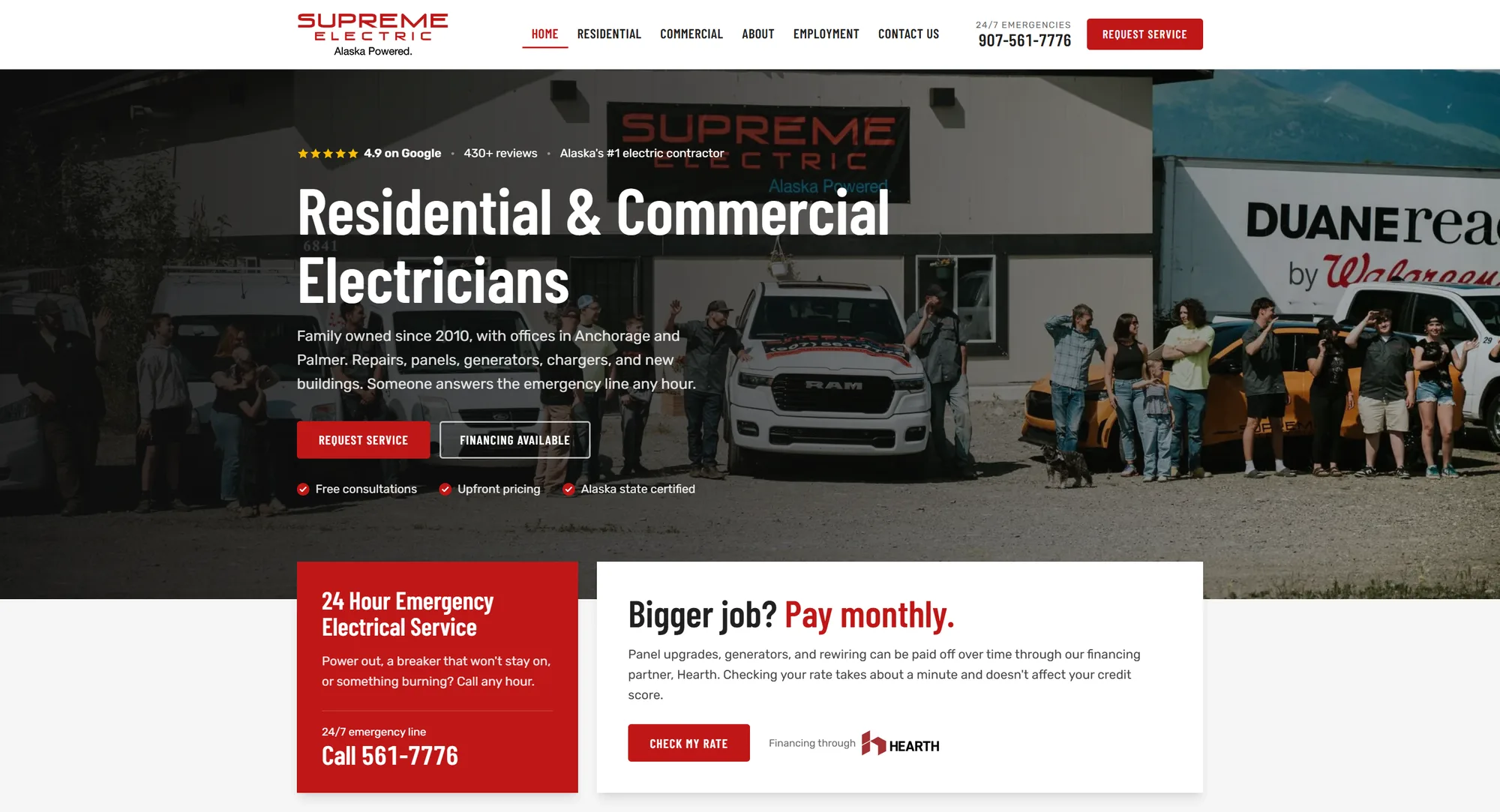
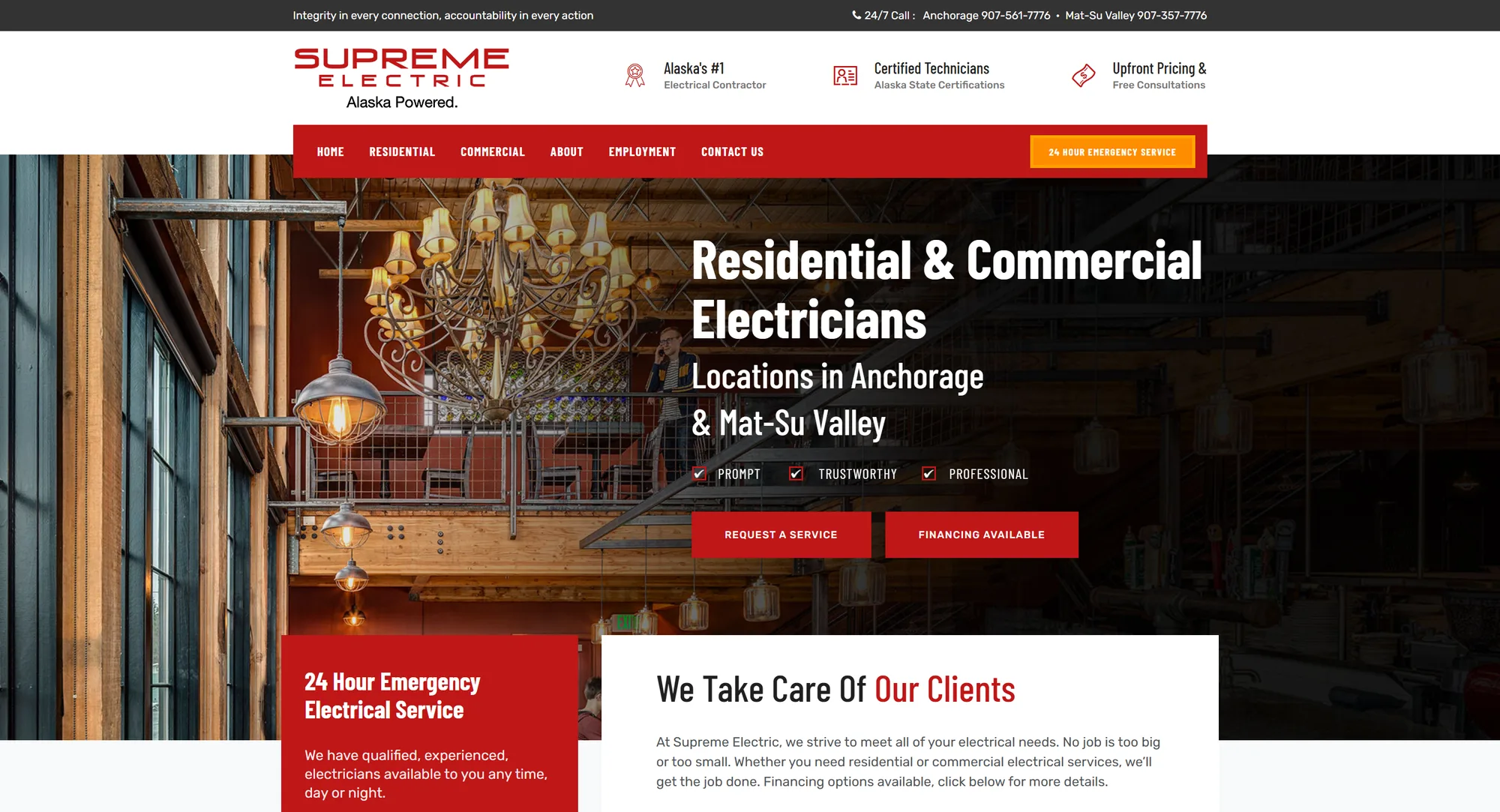
Drag to compare. The old site as it runs today, and the new one, on a computer.Open the new site ↗ (opens in a new tab)
The brief. Don't break what works.
Supreme Electric has two offices, Anchorage and Palmer, and more than 400 Google reviews across them, rated 4.9 and 4.8. People already find them. A new website could only make that worse if it moved pages around or lost what Google had learned about them.
So the job wasn't a reinvention. It was to keep every address, keep the brand people recognize, and fix what was actually costing them: a slow page on phones, unfinished pages in public, stock photos where the crew should be, and an emergency line that wasn't clear.
Where it started. A WordPress theme, a few years in.
A busy page before any help
A motto bar, a strip of icons, a red menu, and an orange button all stacked above the headline. The emergency number was there, but so was everything else.
Two phone numbers, one emergency
Both offices were listed as 24/7 lines. Only one actually takes emergency calls, so a scared customer at midnight could call the wrong one.
Stock photos of strangers
A bar with a chandelier and a man on a cell phone. Nothing on the home page showed the real crew, the trucks, or their work.
Unfinished pages, live
Five service pages, among them video surveillance, commercial security, and electrical engineering, were still the theme's Lorem ipsum placeholder text, reachable from Google.
Six town pages with nothing on them
Anchorage, Eagle River, Wasilla, Palmer, Girdwood, and Remote Alaska each had a title and a placeholder photo. No words at all.
A sitemap that missed a third
The sitemap listed 71 addresses. Following every link found 103: team member pages, hidden service pages, and WordPress leftovers.

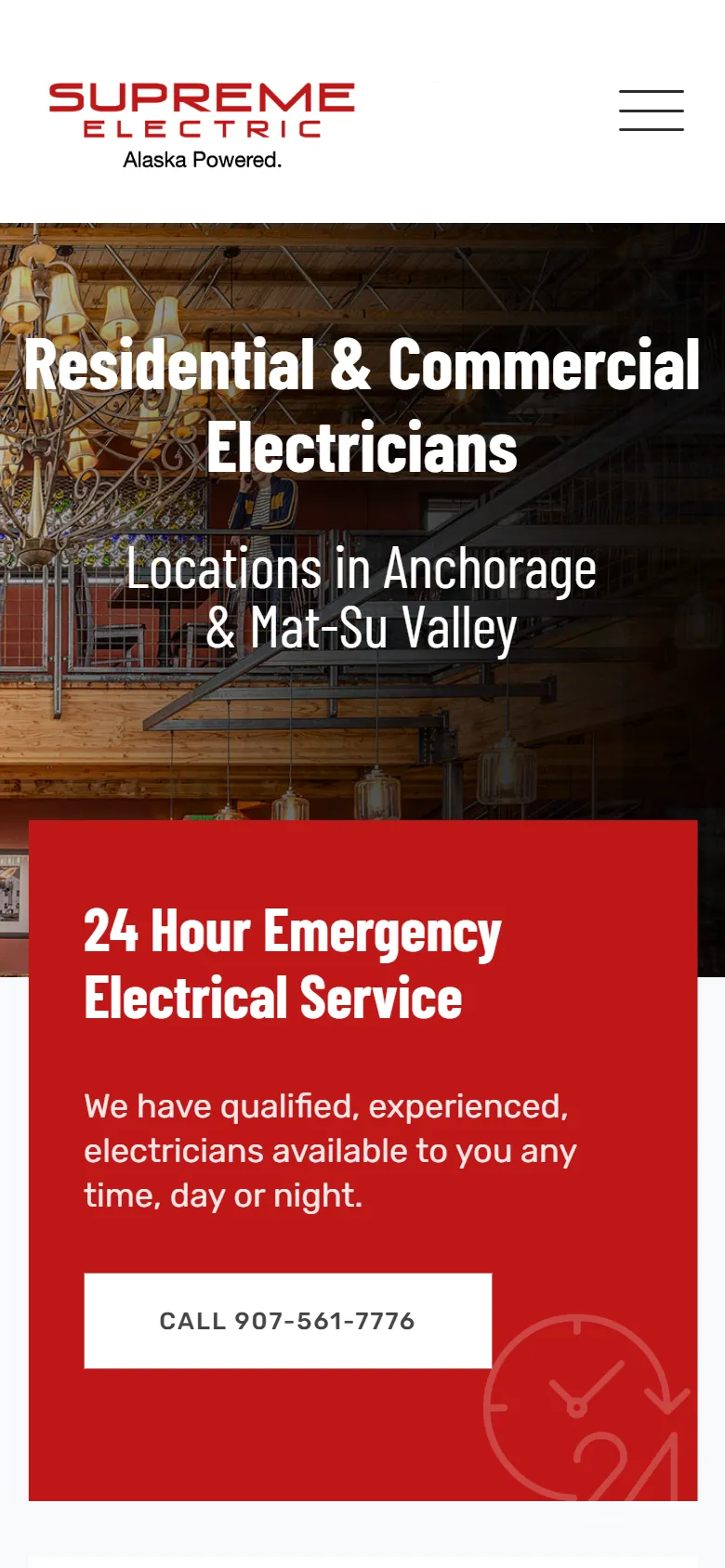
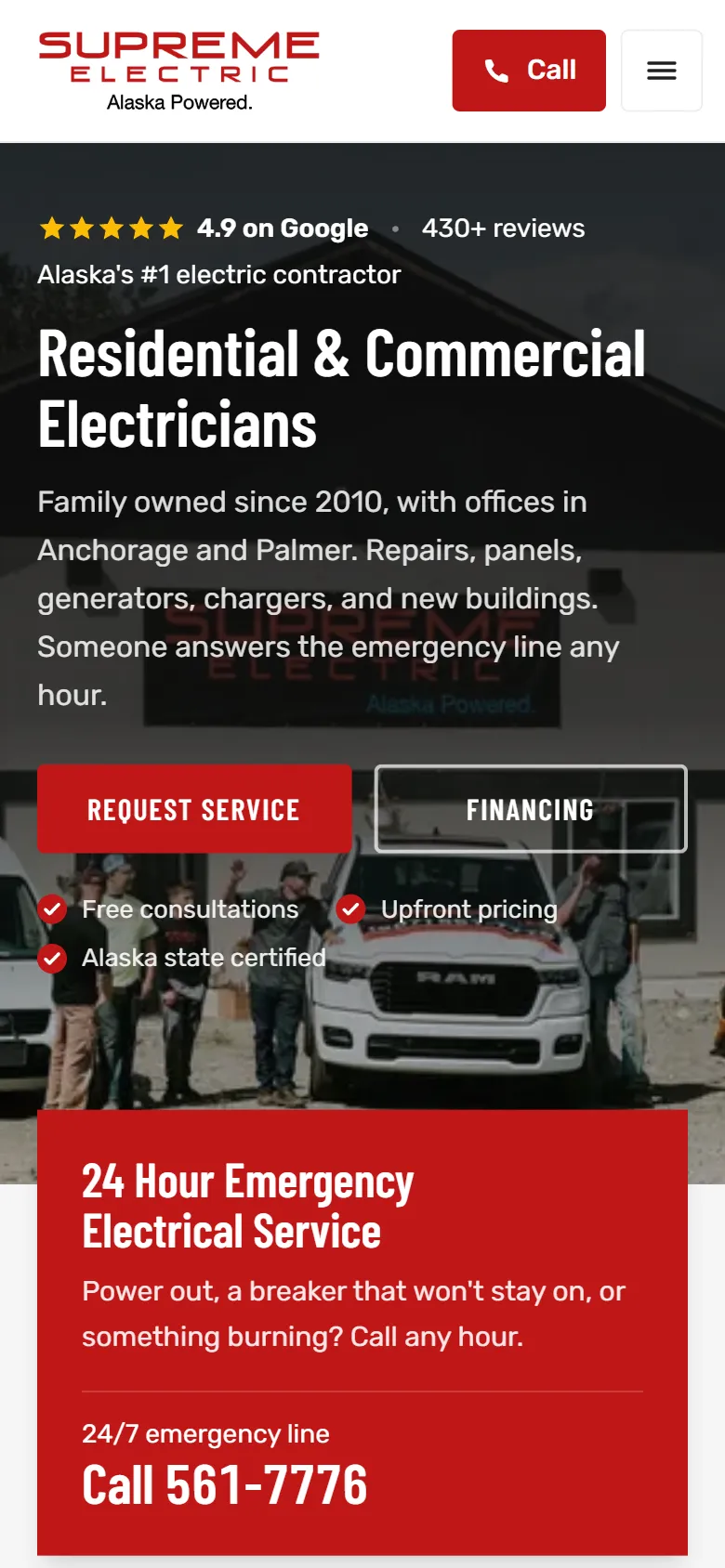
On a phone. Where the 2 a.m. calls come from.
The new home page fits the headline, both buttons, and the whole emergency card on an iPhone screen before you scroll. One number, labeled as the 24/7 line, big enough to tap without aiming.
What we kept. On purpose.
- Their addresses
- Every real page lives at exactly the address it had, like /service/residential-electricians-available-24-7/. Nothing Google ranks has to move.
- Their look
- Same red, same two fonts (Barlow Condensed and Rubik), same logo. Customers who know the old site still recognize it.
- Their words where they were true
- Their headline, "Alaska's #1 electric contractor," the services they really offer, the towns they really serve, and every review, word for word.
- Their way of working
- Forms email the office inbox they already use. No new login, no dashboard, nothing for the office to learn.
We did try new looks first: a bright layout built from their van, a few others. They looked nice, and they looked like every other new website. Their existing style was already theirs, so we rebuilt in it and spent the effort on what customers actually notice. The one big change up top is the photo: their whole crew in front of the Palmer shop, with their Google rating above the headline, pulled live, and the three things people ask first right under the buttons: free consultations, upfront pricing, Alaska state certified.
What we built. Plain words, real people, one clear number.
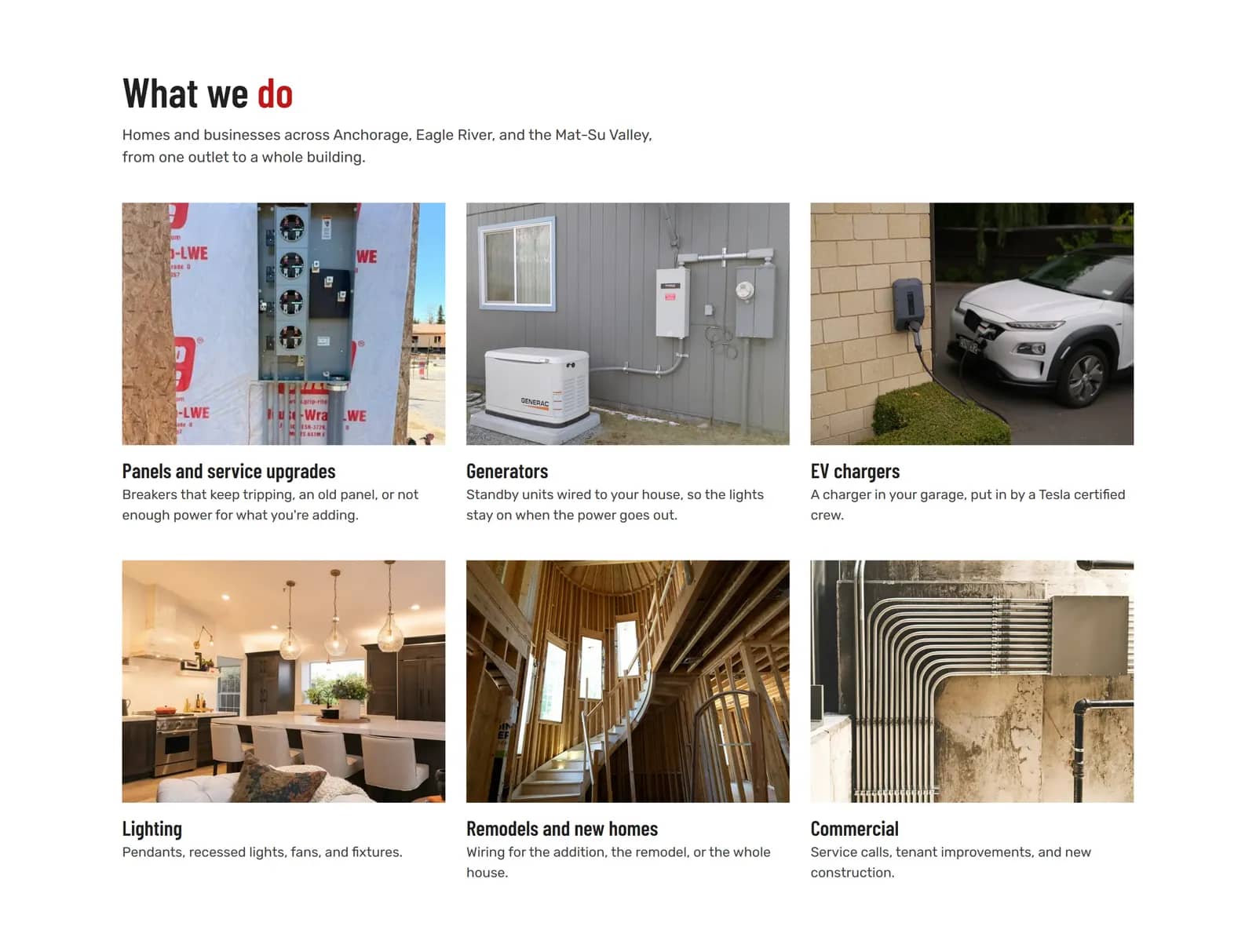
What they do, as finished work
Six services, each with a photo of the result a customer pictures: a new service on a building going up, a standby generator, a charger in a garage. Their own job photos wherever they're good enough; stock only where there's no one to mistake for the crew.
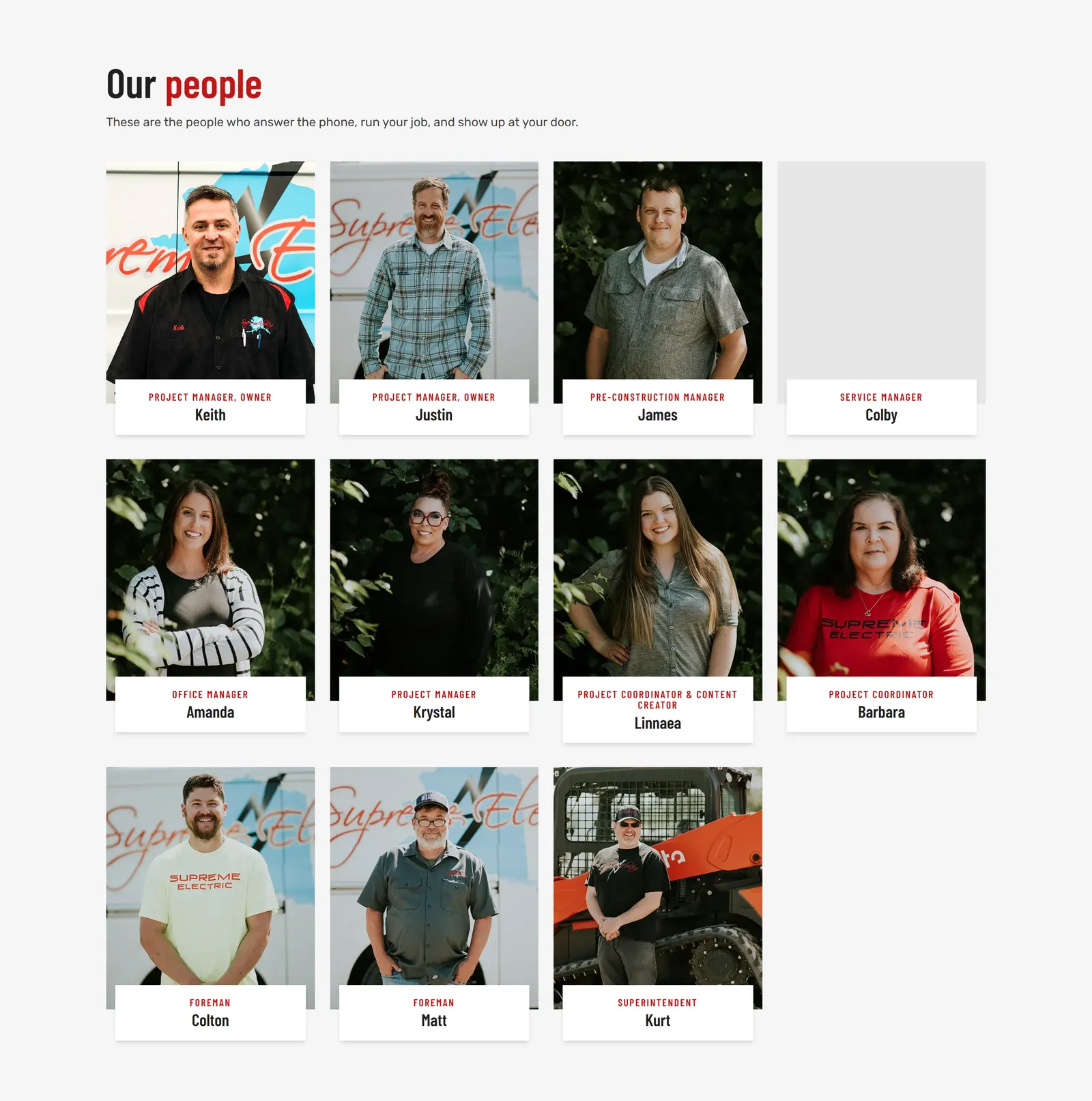
The real team
Eleven people with their roles, in the order the office uses. Colby is listed without a portrait until he has one, the way the old site did it.
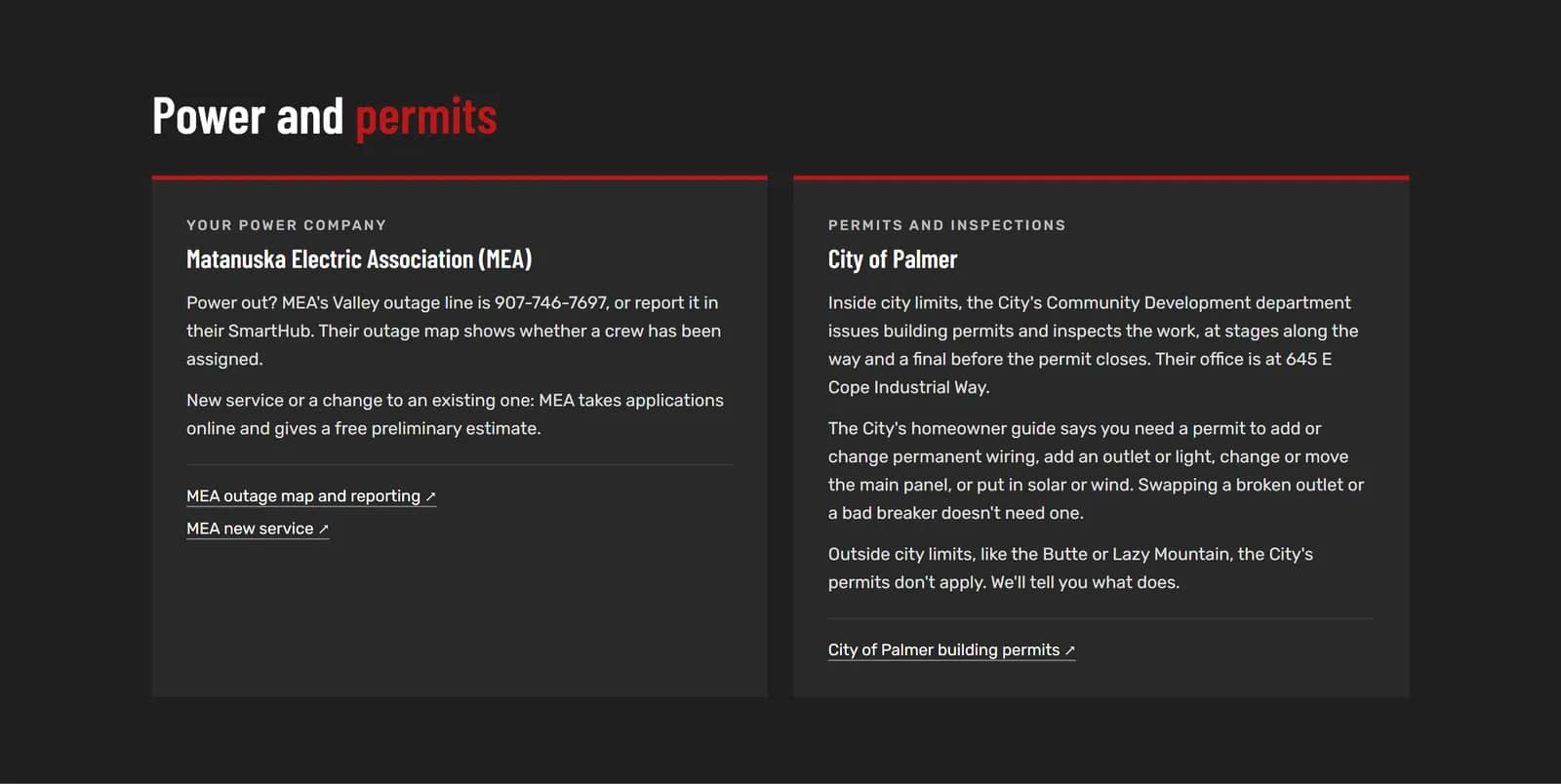
Town pages worth reading
Each town page says which office covers it, which utility serves it and who handles permits there, with links to both, plus the conditions that matter locally: windstorms on the Hillside, wells in the Valley, cabins that sit empty in Girdwood.
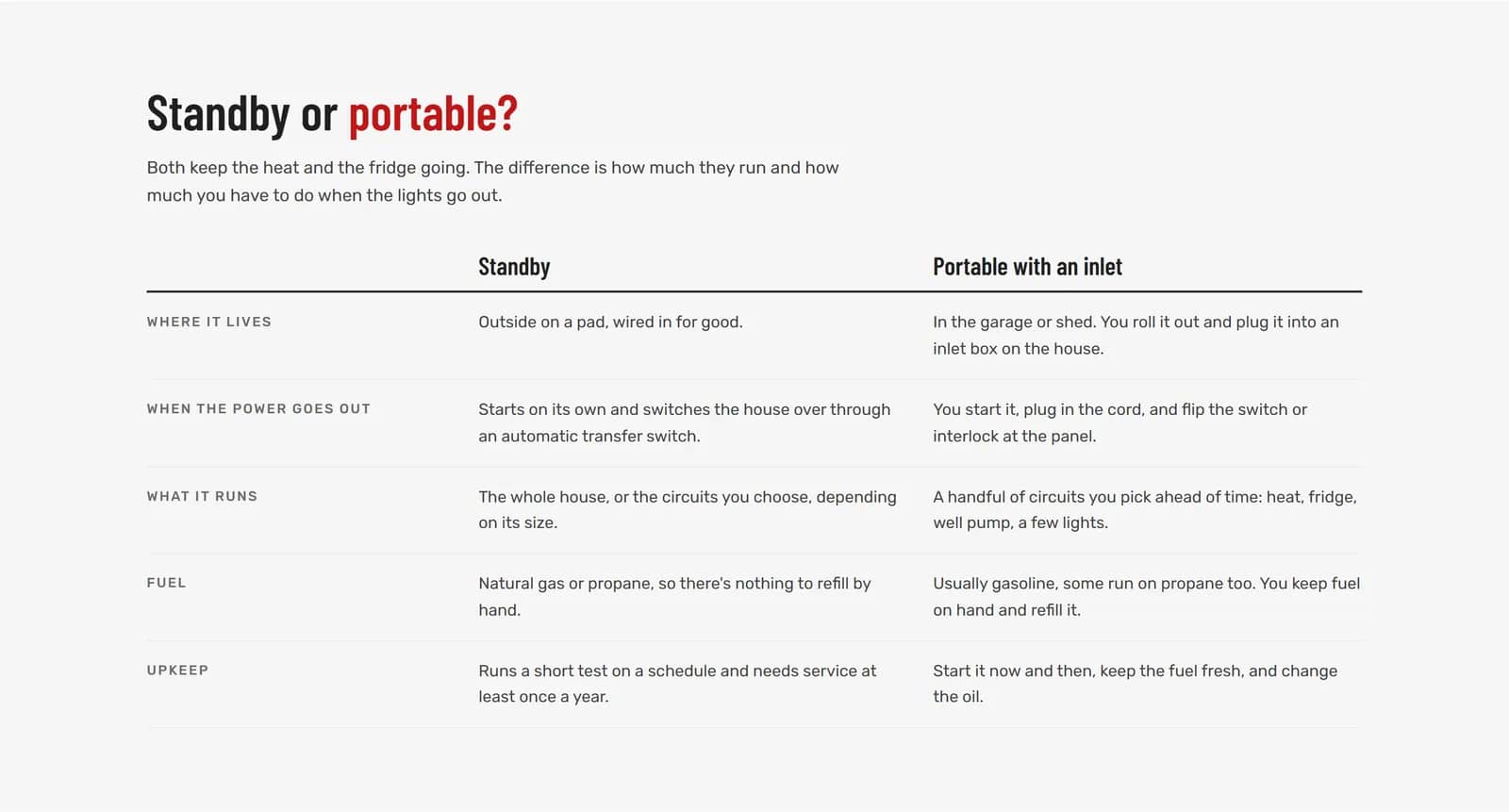
Service pages that answer questions
Each service explains what a customer needs to know before calling: standby versus portable generators, Level 1 versus Level 2 chargers, signs a panel isn't keeping up. Every page ends in a short FAQ.
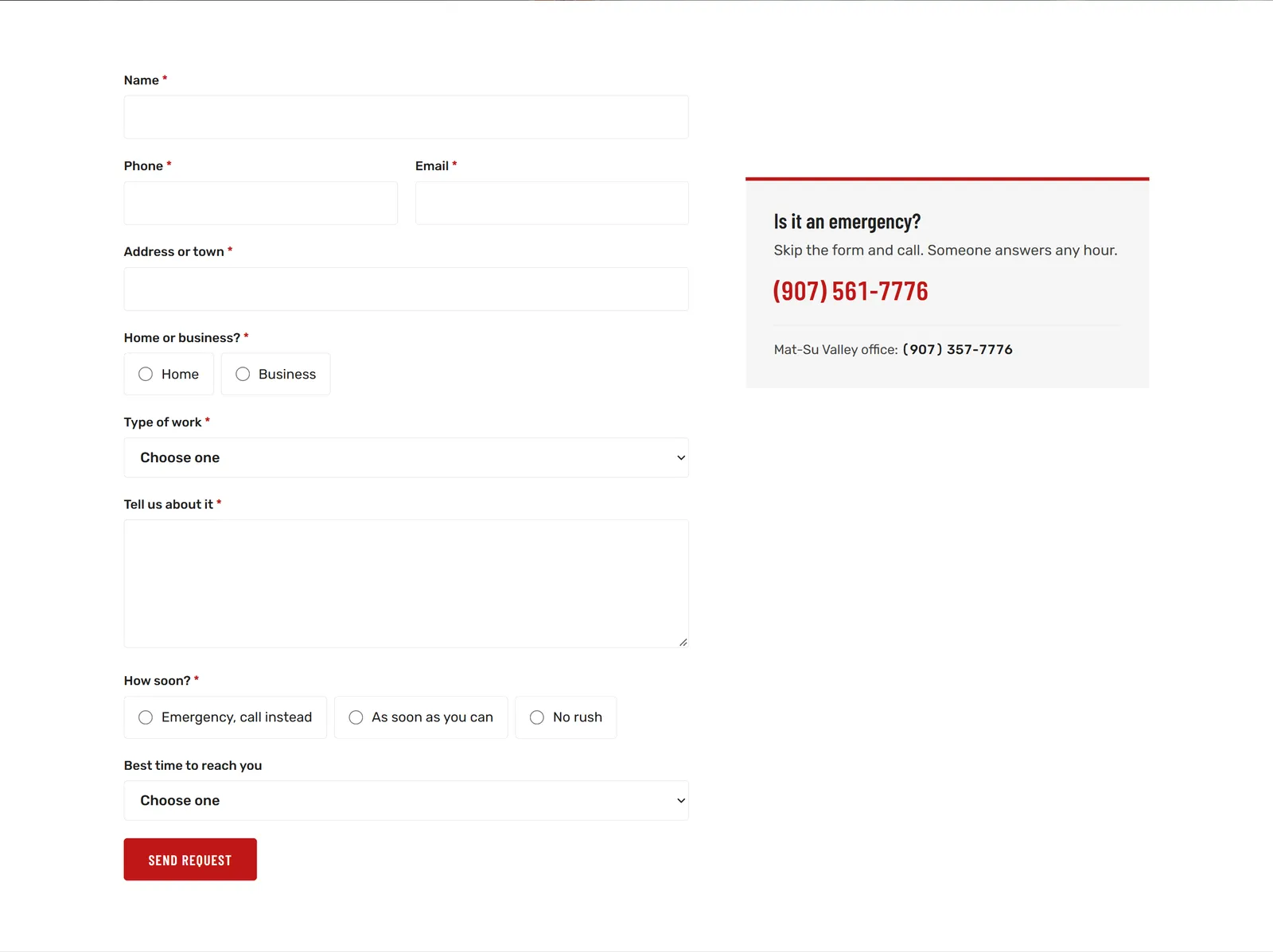
A request form that knows what an emergency is
Pick "Emergency" and the form gets out of the way: a big call button replaces it. Everything else goes to the office inbox with the type of work, the town, and how soon.
Reviews that stay current. Straight from Google, once a day.
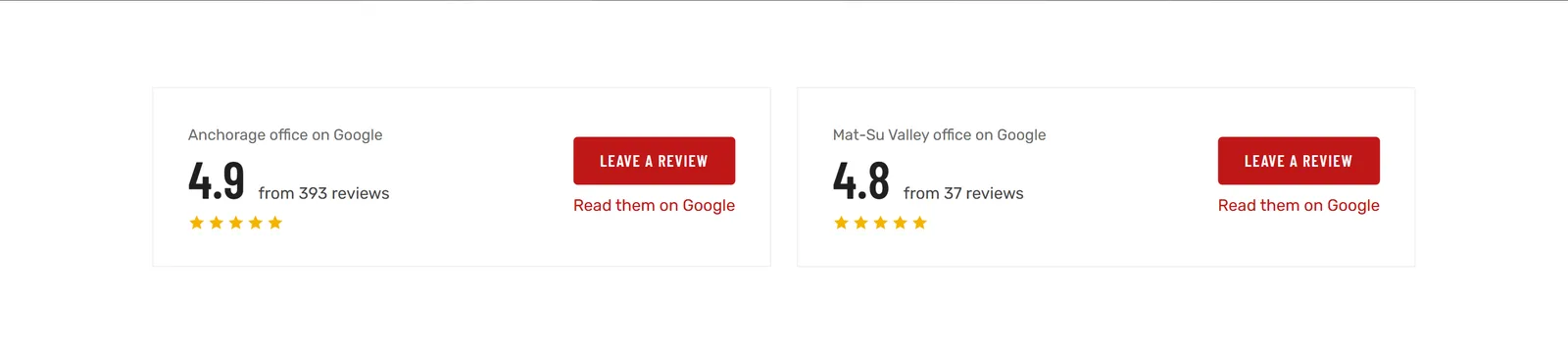
The old reviews page was a slider of a few quotes copied by hand. Each office has its own Google listing, so the new page shows both ratings, pulls the newest reviews from each once a day, and gives each office its own button that opens Google's review box directly. The 30 reviews from the old site are still there underneath, folded away.
The numbers. Measured the same way, on the same day.
Lighthouse on a phone, Google's own test, run on both home pages on Nov 2, 2026. Neither page shifts around while it loads. The office maps now load only when someone taps for one, which keeps a megabyte of map code off every page.
- Speed score6798
- Accessibility score88100
- Best practices score6196
- First thing shows in3.0s1.1s
- Main content shows in7.7s2.4s
- Home page weight1.6 MB0.6 MB
- Time the page is frozen110 ms20 ms
Keeping their place on Google. All 103 addresses accounted for.
We crawled every link on the old site, not just its sitemap. 22 real pages keep their exact address. The other 81, from single-review pages to the placeholder service pages, each forward to the closest real page, and every one was tested against the new site before launch.
Every page now has something pointing to it too. Before, four pages and all six town pages had no links at all, so Google had little reason to look at them.
// Every old address, pointed at the closest page
"/home-2/" → "/"
"/service/qmerit/" → "/service/electric-vehicle-charges-index/"
"/service/video-surveillance/" → "/service/smart-home-security-setup-by-professionals/"
"/service/residential-generators/" → "/service/generators/"
"/service-category/residential-electrical-services/" → "/service/residential-electricians-available-24-7/"
"/team-member/:name/" → "/our-team/"
"/testimonial/:name/" → "/reviews/"
// …and the rest, each one tested